What Are the Best Resources for Financial Education: Free and Paid Options
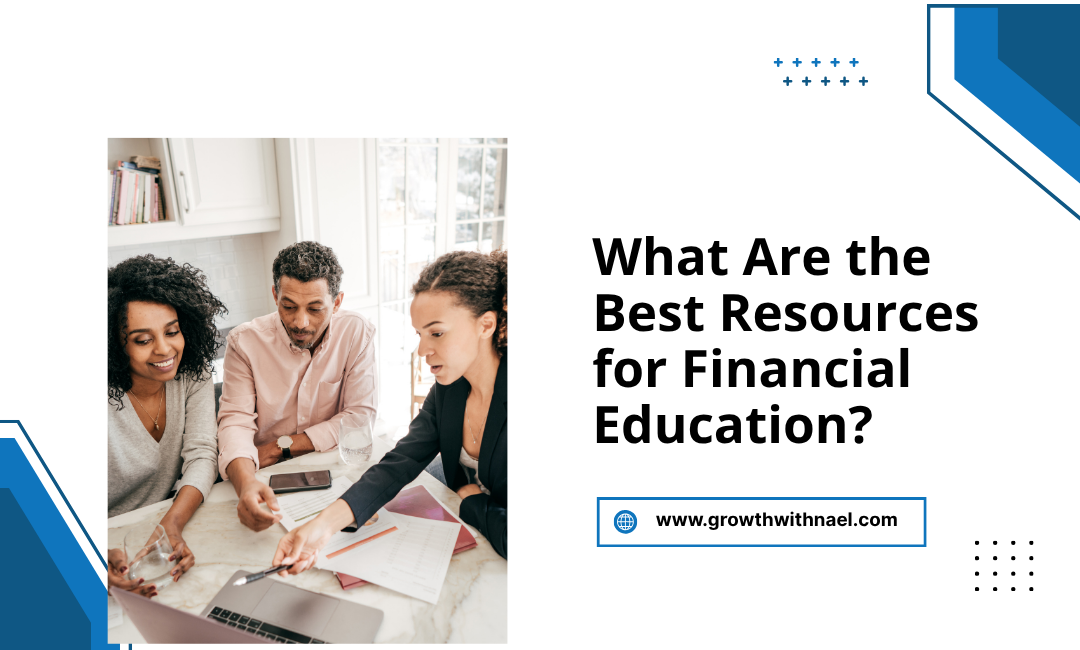
You want to learn about money. But where do you start?
Despite its importance in everyday lives, personal finance has historically been left off school curriculums, leaving many adults without proper education or guidance as to how their finances actually work.
Here's your roadmap:
- Top-rated free online courses from universities and platforms
- Essential books and podcasts that actually teach useful skills
- Interactive tools and apps for hands-on learning
- How to choose resources that match your learning style
Growth With Nael curates the best financial education resources because we know one size doesn't fit all—you need options tailored to how you learn best.
Free Online Courses That Deliver
Khan Academy's financial literacy course, partnered with Capital One, is completely free and breaks down complex financial concepts into self-paced, easy-to-understand units covering budgeting, saving, credit, debt, retirement planning, and more.
The best part? No cost. No prerequisites. Start today.
Khan Academy Financial Literacy
The course includes units on budgeting, investments, insurance, taxes, scams, fraud, and career development—all self-paced so you can pick and choose units or complete the entire course in any order.
What you get:
- Engaging instructional videos
- Interactive articles and exercises
- Unit tests and mastery challenges
- Access anytime, anywhere
- Completely free forever
University-Level Options
The Finance for Everyone course from the University of Michigan on EdX teaches frameworks for making good financial decisions, with an estimated time commitment of five to six hours weekly over six weeks.
MIT OpenCourseWare offers free resources from over 2,500 courses spanning undergraduate and graduate curriculum, including Finance Theory, Mathematical Methods for Quantitative Finance, and Financial Accounting.
Brigham Young University's free online personal finance classes offer beginner, intermediate, and advanced levels with do-it-yourself approaches covering financial independence, saving, trading stocks, and long-term goals.
Quick-Start Courses
- Udemy's Personal Finance 101 is free for beginners, including 50+ short videos totaling almost three hours on topics from credit card basics to financing education and relationships with finances.
- Coursera's "Create a Budget with Google Sheets" teaches budgeting and spreadsheet navigation in just one hour, with 8,000 enrolled and 4.7 out of 5 stars.
- Alison's "Introduction to Managing Your Personal Finance Debts" covers managing or eliminating debt in 1.5 to three hours, including debt prioritization strategies and elimination plans.
Free courses from top universities and platforms make financial education accessible to everyone, regardless of budget or background.
Must-Read Books for Financial Mastery
.jpg)
Highly recommended books for increasing financial literacy include "Rich Dad Poor Dad" by Robert Kiyosaki, "The Intelligent Investor" by Benjamin Graham, and "The Total Money Makeover" by Dave Ramsey.
Books provide depth online courses can't match.
The Classics
- "Rich Dad Poor Dad" teaches financial mindset shifts—how the wealthy think about money differently than everyone else.
- "The Intelligent Investor" remains the bible of value investing, written by Warren Buffett's mentor Benjamin Graham.
- "The Total Money Makeover" offers Dave Ramsey's step-by-step plan for eliminating debt and building wealth.
These books can be found in local bookstores, online retailers like Amazon, or at your local library—reading books provides a more in-depth understanding of complex financial concepts and practical strategies for managing money effectively.
Where to Find Them
Your local library offers these books for free. No excuses about cost.
Online retailers sell physical and digital versions. Audiobook platforms let you learn during commutes.
Start with one book this month. Finish it. Apply what you learn. Then move to the next.


Podcasts and Blogs for Ongoing Education
Podcasts are a fantastic resource for learning about financial topics while on the go—listen during commutes, chores, or free time to learn from experts and industry professionals who share insights, tips, and advice.
Audio learning fits busy lives.
Top Financial Podcasts
Numerous podcasts cover personal finance, investing, entrepreneurship, and wealth-building. Search platforms like Spotify or Apple Podcasts for:
- Personal finance fundamentals
- Investing strategies
- Real estate
- Business and entrepreneurship
- Behavioral economics
Essential Blogs
Reading personal finance blogs provides valuable information and practical advice you can apply to your financial situation—popular blogs include The Penny Hoarder, NerdWallet, and Get Rich Slowly.
Make it a habit to regularly read these blogs for the latest trends and strategies. Subscribe to favorites. Set aside 15 minutes daily.
The Vault (Education First's blog) offers practical advice. NerdWallet provides tools and comparisons. Get Rich Slowly focuses on sustainable wealth-building.
Interactive Tools and Platforms
Financial education platforms offer interactive learning experiences with tools, resources, and courses, including interactive quizzes, calculators, and simulations to reinforce learning.
Learning by doing beats passive reading.
Gamified Learning
Education First partners with Zogo, a gamified financial literacy app that rewards you for completing bite-sized financial literacy lessons.
Other platforms include Mint for budgeting, Investopedia for definitions and calculators, and MyMoney.gov for federal resources.
Government Resources
The Consumer Financial Protection Bureau creates resources for audiences with specific needs, including tools, worksheets, handouts, and audio recordings by topic and audience.
Topics covered:
- Auto loans and credit cards
- Credit reports and scores
- Debt collection
- Housing and mortgages
- Savings and bank accounts
- Money management strategies
They provide resources for justice-involved individuals, Native communities, newcomers, people with disabilities, and young adults—including translated financial terms for non-English speakers.
Specialized Platforms
CashCourse is a free online financial education resource designed specifically for college and university students, offering customizable courses, worksheets, quizzes, videos, and resources.
Next Gen Personal Finance (NGPF) is the #1 provider of personal finance curriculum and professional development for educators in grades 6-12, offering free comprehensive resources aligned to state standards.
Growth With Nael uses many of these platforms with clients because interactive learning accelerates understanding and retention compared to passive consumption.
Choosing Resources That Match Your Style
.jpg)
Online personal finance courses should be seen as educational resources, not specific personal financial advice—information learned should be applied within the context of your own financial situation, rather than following everything 100%.
One size never fits all.
Visual Learners
Start with video-based courses like Khan Academy, Udemy, or university platforms. Watch, pause, rewatch. Take notes.
Auditory Learners
Podcasts work best for you. Listen during commutes. Supplement with audiobooks. Join discussion groups.
Reading/Writing Learners
Books and blogs are your foundation. Take detailed notes. Write summaries. Create action plans from what you read.
Kinesthetic Learners
Interactive platforms, calculators, and simulations engage you best. Build actual budgets. Use real numbers. Practice with tools.
Set Your Learning Path
- Beginner: Khan Academy + one classic book + one podcast
- Intermediate: University course + specialized books + multiple blogs
- Advanced: MIT courses + investment books + professional podcasts
Keep in mind that some things learned in a personal finance course may not be applicable to you or appropriate to implement in your own life—filter everything through your situation.
Ready to Build Your Financial Education With Growth With Nael?
The best resources for financial education span free university courses from Khan Academy and MIT, classic books like "Rich Dad Poor Dad" and "The Intelligent Investor," podcasts for on-the-go learning, and interactive platforms that make financial concepts tangible through practice.
No single resource works for everyone. Visual learners thrive with video courses. Auditory learners prefer podcasts. Readers need books. Kinesthetic learners require interactive tools.
Your action plan:
- Start with Khan Academy's free, comprehensive financial literacy course
- Read one classic personal finance book this month
- Subscribe to 2-3 financial podcasts for your commute
- Use interactive tools like Mint or CFPB resources for hands-on practice
Growth With Nael helps you navigate these resources strategically. We don't just point you toward courses—we help you build a personalized learning path matching your style, situation, and goals. Because the best financial education resource isn't the most popular one—it's the one you'll actually use consistently to transform your relationship with money.