
What Does the Science of Human Development Seek to Understand? The Complete Breakdown
You've changed more in the last decade than you probably realize. Your brain rewired itself. Your relationships shifted. Your values transformed. But why?
That's exactly what the science of human development seeks to understand. Researchers spend entire careers mapping how we grow, adapt, and evolve from conception through our final days. Over 85% of who you become traces back to predictable developmental patterns.
Here's what we'll cover:
- The core questions developmental science answers about human growth
- Key areas researchers study (physical, cognitive, emotional, social)
- How nature and nurture shape who you become
- Why understanding development helps you grow intentionally
Growth With Nael uses these scientific principles to help you design your own development. Because once you understand how humans change, you can engineer your own transformation.
The Core Questions Developmental Science Answers
Developmental science asks questions that shape how we understand being human. These questions drive research across psychology, biology, and neuroscience.
What Changes Throughout Life?
Researchers track three major domains: physical development (body and brain changes), cognitive development (learning, memory, language), and psychosocial development (emotions, personality, relationships).
You're not the same person at 5, 25, or 55. Science maps exactly what shifts and why.
How Do We Change?
Scientists debate whether development is continuous (gradual, like adding inches to height each year) or discontinuous (sudden stages, like puberty). Think smooth slope versus staircase.
Both patterns exist. Your height grows continuously. Your thinking? That jumps in stages.
Is There One Path or Many?
Some researchers argue that development follows universal stages, while others say genetics and environment create unique paths for each person.
Here's what we know:
- Language milestones happen in similar sequences worldwide
- Motor skills vary wildly based on culture and opportunity
- Your specific timeline is yours alone
Nature or Nurture?
Both genetic and environmental factors heavily influence growth and development. The real question isn't which one wins—it's how they interact.
Growth With Nael helps you work with your developmental patterns instead of against them. Because understanding these questions isn't just academic—it's your roadmap to intentional growth.
Key Areas Researchers Study
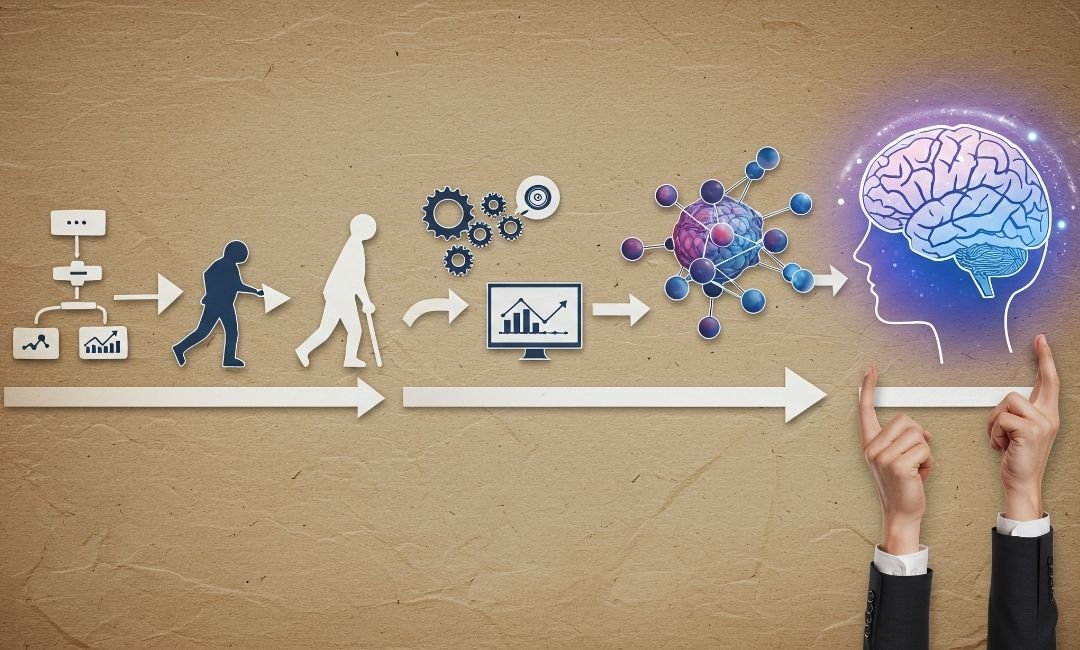
Developmental science divides human growth into four interconnected domains: physical, cognitive, emotional, and social. You can't change one without affecting the others.
Physical Development
This covers body and brain changes, motor skills, sensory development, and health across your entire lifespan. It's not just about kids growing taller.
Cognitive Development
This includes thinking, reasoning, memory, language, problem-solving, and how you learn. Your brain processes information differently at 7 than at 27.
Emotional Development
From birth, humans express three core emotions: anger, joy, and fear. Everything else you learn.
Social Development
This covers how you relate to others, build relationships, and navigate social contexts. Adolescence is when you establish identity and figure out where you fit.
Physical Development Insights
Your brain continues rewiring itself well into your 20s. During adolescence, your prefrontal cortex—responsible for planning and emotional control—undergoes massive reconstruction. That's why teenagers make risky decisions.
Cognitive Development Stages
Jean Piaget mapped this into four stages, from sensory learning in infants to abstract thinking in adults. Each stage builds on the last—you can't skip steps.
Emotional Development Milestones
The first 18 months see rapid growth in your brain's emotional processing centers—the amygdala and limbic system. What happens during this window shapes how you handle stress for decades.
1-2 months
Social smiling begins
6 months
Reading facial expressions becomes possible
1 year
Showing clear preferences for caregivers
2 years
Parallel play with peers emerges
Social Development Context
Kids develop social skills through consistent interactions with caregivers, teachers, and peers. Each relationship teaches you something different about connection.
Growth With Nael works directly with these developmental domains. We show you which areas need attention and how to strengthen them deliberately.
How Nature and Nurture Shape You
Nature and nurture are inseparable—they've worked together since conception. Picking sides is pointless.
Genes Load the Gun, Environment Pulls the Trigger
This analogy captures it perfectly. You inherit genetic potential, but your environment determines if and how that potential expresses itself.
Take PKU—a genetic disorder that causes brain damage. But give an affected baby a low-phenylalanine formula, and the disease never develops. Same genes. Different outcome. Environment changed everything.
The Real Interaction
Modern research focuses on gene-environment interactions—how your genes respond to your surroundings. Your DNA isn't destiny. It's a starting point.
Examples of this interplay:
- Intelligence is 50-80% heritable, but the Flynn effect shows IQ scores jumped 3 points per decade throughout the 1900s—too fast for genetics alone
- Children with responsive, nurturing parents show better gene expression for cognitive and emotional development than those with low-quality caregiving
- Exercise increases neurogenesis (new brain cell production) in adults, proving your brain responds to what you do
Epigenetics: The Missing Link
Epigenetics is the mechanism connecting nature and nurture—your experiences cause chemical modifications that regulate which genes turn on or off.
Your childhood experiences literally change how your genes work. And some of these changes can pass to your kids.
The Growth With Nael approach uses this knowledge strategically. We help you design environments that activate your best genetic potential instead of your worst.
Why Understanding Development Helps You Grow
.jpg)
Most people drift through life reactive to whatever happens. Understanding development lets you become proactive.
You Stop Fighting Your Biology
Brain plasticity is heightened during sensitive periods like adolescence. Know when you're primed for change, and you can exploit those windows.
You'll waste less time forcing growth during resistant phases. You'll push harder during receptive ones.
You Build Better Systems
Development is context-specific—skills grow faster in environments designed to support them.
Once you understand how humans learn and change, you can engineer your surroundings. Your habits. Your relationships. Your daily routines. Everything becomes a tool.
You Make Smarter Investments
Understanding social context helps you choose better relationships, career paths, and growth opportunities. You'll know which experiences will actually move the needle.
Practical applications:
- Recognizing which emotional patterns trace back to early attachment
- Identifying cognitive blind spots from your developmental stage
- Choosing mentors who fill specific developmental gaps
- Timing major life changes with your natural readiness
Research shows intentional personal development significantly improves life satisfaction and psychological health. But intentional is the key word.
Apply Developmental Science to Your Life
- Identify your current developmental stage and its opportunities
- Create environments that support your growth goals
- Work with your natural patterns instead of against them
- Seek experiences that target your developmental needs
- Build relationships that complement your growth areas
Ready to Master Your Development With Growth With Nael?
Understanding the science of human development isn't academic. It's your blueprint for intentional transformation. You've learned what researchers spend careers studying. Now comes the application.
Here's what you now know:
- Development spans physical, cognitive, emotional, and social domains that interact constantly
- Nature and nurture work together through epigenetics and gene-environment interactions
- Sensitive periods and brain plasticity create optimal windows for change
- Context-specific growth happens faster when you design the right environment
Growth With Nael takes this science and makes it personal. We help you identify where you are developmentally, what needs work, and how to engineer the conditions for rapid growth. Because understanding how humans change is only valuable when you use it to change yourself.